
Meteorological research and development
At the Meteorology research unit, we are just over forty researchers and specialists with expertise spanning meteorology, theoretical physics and atmospheric chemistry to mathematics and computer science.
We work with observational data, meteorological analyses, and the development of numerical models for regional weather forecasts in the Nordic region, as well as remote sensing, climate analysis, and air quality from urban to global scales. This work is based on knowledge in classical computational systems, numerical modelling, and process understanding, and is guided by a strong commitment to scientific excellence.
Our research and development enhance the scientific basis of numerical models, refine the representation of physical processes in the atmosphere and near the land surface, increase model resolution, and integrate data from new sources. We continuously advance our activities through developments in high-resolution simulations, data assimilation, and digital twins. At the same time, we explore and integrate AI and machine learning methods in areas and processes where they add value.
Our specialists have deep knowledge of various observation techniques and the use of such data, including radar and satellite systems. Our collective expertise contributes to expanding the use of remote sensing data both in model development and in a wide range of meteorological and climatological analyses.

Find on this page
Our research areas give focus and in-depth knowledge
The five research areas focus around questions that bring great benefit to SMHI's operations and society at large:

Atmospheric chemistry and air pollution models
Focus on atmospheric physical and chemical processes
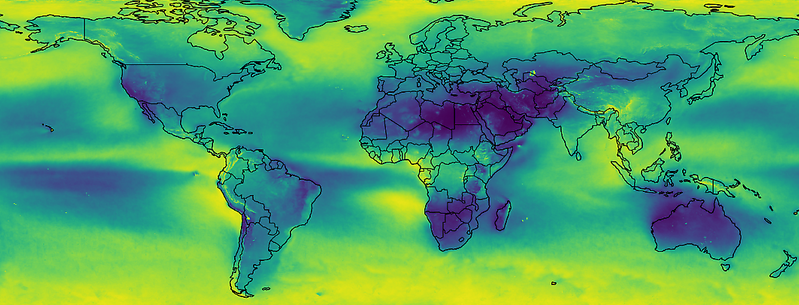
Climate monitoring and research using remote sensing
More climate knowledge from satellite and radar
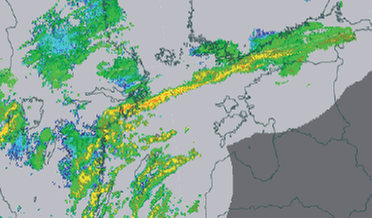
Nowcasting and remote sensing
New types of data to short-term forecasts

Atmospheric and surface processes
Research for more accurate forecasts
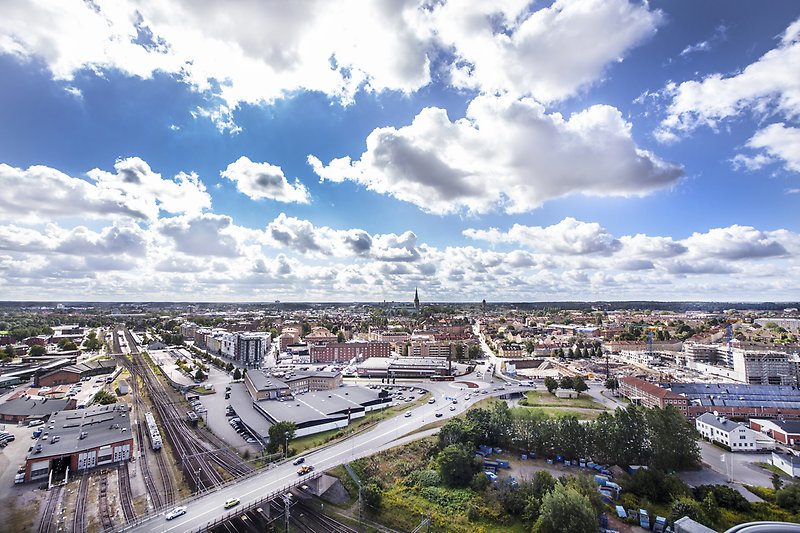
Urban climate and air quality
Heat and air quality in cities
BRIGHT – Advancing knowledge and tools for the adaptation of Swedish cities to heat
Project BRIGHT aims to contribute with new knowledge, optimized methods, enhanced tools and user tailored data that enable Swedish municipalities to better adapt to climate change, with a focus on heat waves. A prototype visualisation platform will be developed that integrates knowledge from high resolution modeling da...
CAMEO and CAMAERA – Two research projects developing Copernicus atmospheric service
The Copernicus Atmosphere Monitoring Service (CAMS) monitors the composition of the atmosphere. Now two European research projects will develop the service. SMHI is one of the partners.
CARRA2 – A new generation Copernicus pan-Arctic regional climate reanalysis
In 2021 Copernicus Climate Change Service released the dataset CARRA1, with a 30-year reanalysis of the Arctic climate (1991-2021). The CARRA dataset is now updated monthly, providing new data with three or fewer months latency. The second phase of the project has started, which will extend the dataset to cover the per...CERISE – Research project to improve climate reanalysis and seasonal forecast systems
CERISE aims to enhance the quality of C3S climate reanalyses and seasonal forecast products.Exploring the transformative potential of climate services
In the research project “Exploring the Transformative Potential of Climate Services,” SMHI researchers will collaborate with a group of researchers from Tema M - Environmental Change and Media and Information Technology at Linköping University to address the future of climate services.
A important part of our daily work is the development of numerical computational models. We are engaged in research and development to continuously improve these systems through higher resolution, more advanced process descriptions and new data sources.

All of us at the meteorological research unit
The unit is led by Jorge Amorim, together with Jelena Bojarova and Cecilia Bennet.
We publish our research results in international peer-reviewed journals and in SMHI reports. The two most recent publications from SMHI's meteorological research are:
Numerical Weather Prediction Model Coupling-Strategies, Challenges, and Outlook
Josh Kousal, Charles Pelletier, Jasper M. C. Denissen, Luise Schulte, Sarah Keeley, Peter Dueben, Stephen G. Penny, Rae-Seol Park, Diego G. Miralles, Metodija Shapkalijevski, Arianna Valmassoi, Ian Renfrew, Lorenzo Zampieri, Rajesh Kumar, Melissa Ruiz-Vasquez, Jan-Peter Schulz, Lichuan Wu, Xabier Pedruzo Bagazgoitia
In: Bulletin of The American Meteorological Society - (BAMS), Vol. 107, No. 1
2026
Satellite derived product benchmarking and empirical model development for estimating photosynthetically active radiation at high latitudes
Sebastian Zainali, Silvia Ma Lu, Tomas Landelius, Pietro Elia Campana
SMHI recruits Nedjeljka Žagar to its professorship in meteorology
Following a thorough recruitment process in which five candidates reached the final stage, Nedjeljka Žagar has been appointed Professor of Meteorology at SMHI. She will take up the position on 1 September 2026.
Time to realise the new EPS-Sterna satellite programme
It is time to take Europe’s new satellite programme EPS-Sterna from the drawing board into space. The programme will provide a significant addition of satellite data that SMHI will benefit from in its societally critical work on weather forecasts and warnings, as well as for research.
New AI model aims to improve forecasts for clouds and wind
Recent years’ advances in AI-based weather forecasting show that AI methods can create concrete societal benefits. In a new research project, SMHI will use AI to meet the need for faster forecast production, delivering more up-to-date forecasts for clouds and wind. Key concepts are machine learning, data-driven methods...