
Pasha Karami
Fil.dr, forskningsledare vid Rossby Centre.
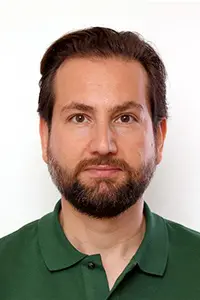
Pasha Karami
Verksamhetsområden
Global klimatmodellering, regional och global havsmodellering, arktiska oceanen och klimatdynamik, decadala klimatprognoser, årliga och dekadala klimatvariabiliteter samt fysisk oceanografi.
Forskningsintressen
- Arktiska ishavets roll som is- och färksvattenexportör till norra Atlantens cirkulation och klimat.
- Undersökning av årliga och dekadala klimatvariabiliteters processer för att de bättre ska kunna representeras i framtida klimat.
- Förstå havets och klimatets dynamik genom att använda globala och regionala klimatmodeller med hög upplösning.
Specialkompetenser
Utföra och analysera klimat- och havsmodellsimulationer; jämförelser mellan modeller och observationer.
Variations in Arctic Ocean Dynamics and Hydrography Under 127 ka Last Interglacial Conditions and Future Warming
Marie Sicard, Agatha M. de Boer, Helen K. Coxall, Torben Koenigk, Pasha Karami, René Gabriel Navarro Labastida, Martin Jakobsson, Matt O'Regan, Flor Vermassen
Miocene Ocean Gyre Circulation and Gateway Transports-MioMIP1 Ocean Intercomparison
Trusha J. Naik, Agatha M. De Boer, Helen K. Coxall, Natalie J. Burls, Catherine D. Bradshaw, Yannick Donnadieu, Alexander Farnsworth, Amanda Frigola, Matthew Huber, Pasha Karami, Gregor Knorr, Allegra N. Legrande, Yousheng Li, Gerrit Lohmann, Daniel J. Lunt, Matthias Prange, Yurui Zhang
Exploring Storm Tides Projections and Their Return Levels Around the Baltic Sea Using a Machine Learning Approach
Kevin Dubois, Erik Nilsson, Morten Drews Dahl Andreas, Martin larsen, Magnus Hieronymus, Pasha Karami, Anna Rutgersson
I: Tellus. Series A, Dynamic meteorology and oceanography, Vol. 77, No. 1
2025
Sammanfattning
Extreme sea levels are a major global concern due to their potential to cause fatalities and significant economic losses in coastal areas. Consequently, accurate projections of these extremes for the coming century are crucial for effective coastal planning. While it is well established that relative sea level rise driven by ongoing climate change is a key factor influencing future extreme sea levels, changes in storm surges resulting from shifts in storm climatology may also play a critical role. In this study, we project future daily maximum storm tides (the combination of storm surge and tides) using a random forest machine learning approach for 59 stations around the Baltic Sea, based on atmospheric variables such as surface pressure, wind speed, and wind direction derived from climate datasets. The results suggest both positive and negative changes, with sub-regional variations, in 50-year storm tide return levels across the Baltic Sea when comparing the period of 2070-2099 to 1850-1879. Localized increases of up to 10 cm are projected along the west coast of Sweden and the northern Baltic Sea, while decreases of up to 6 cm are anticipated along the south coast of Sweden, the Gulf of Riga, and the mouth of the Gulf of Finland. Negligible levels of change are expected in other parts of the Baltic Sea. The variability in atmospheric drivers across the four climate models contributes to a high degree of uncertainty in future climate projections.
