
Pasha Karami
Ph.D., Researcher.
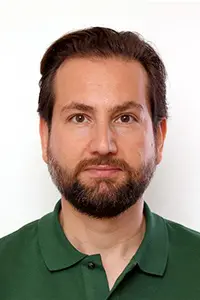
Pasha Karami
Fields of work
Global climate modelling, Regional and global ocean modelling, Arctic ocean and climate dynamics, Decadal climate prediction, Interannual and interdecadal climate variability, Physical Oceanography.
Research interests
- The role of Arctic sea ice and fresh water export in the North Atlantic Ocean circulation and climate
- Investigating the interannual and interdecadal climate variability processes for better representation of future climate
- Understanding the ocean and climate dynamics by applying high resolution global and regional climate models
Special competences
Perform and analyse climate and ocean model simulations. Current projects: FORMAS-funded project- Extreme events in the coastal zone of Baltic Sea, Vinnova-funded project concerning infectious disease risks related to climate(CLAIRE), co-leading the SMHI’s decadal climate prediction simulations.
Past projects: ARCPATH, InterDec, ArcTrain, Paleoclimate modelling as part of ERC-funded project.
The Australian-Indonesian monsoon through time
Mahyar Mohtadi, Martina Hollstein, Pasha Karami, Haowen Dang, Zhimin Jian, Andreas Luckge, James M. Russell, Stephan Steinke
Historical Climate and Future Projection in the North Atlantic and Arctic
Pasha Karami, Torben Koenigk, Shiyu Wang, René Gabriel Navarro Labastida, Tim Kruschke, Aude Carreric, Pablo Ortega, Klaus Wyser, Ramon Fuentes Franco, Agatha M. de Boer, Marie Sicard, Aitor Aldama Campino
Large-scale atmospheric circulation and its impact on the Baltic Sea region
Florian Borgel, Itzel Ruvalcaba Baroni, Leonie Barghorn, Leonard Borchert, Bronwyn Cahill, Cyril Dutheil, Leonie Esters, Malgorzata Falarz, Helena L. Filipsson, Matthias Groger, Jari Hanninen, Magnus Hieronymus, Erko Jakobson, Pasha Karami, Karol Kulinski, Taavi Liblik, H. E. Markus Meier, Gabriele Messori, Lev Naumov, Thomas Neumann, Piia Post, Gregor Rehder, Anna Rutgersson, Georg Sebastian Voelker