
It has long been known that air pollution impacts people, nature, and the environment. SMHI conducts research and develops numerical models to map, among other things, ground-level ozone, particulate matter, and nitrogen and sulfur deposition. Understanding these air pollutants is essential for creating a sustainable and healthy environment.
Creating a healthy environment is part of the goals in Agenda 2030 and Sweden’s environmental objectives. Even though air quality in Sweden is better than in many other countries, poor air and air pollution are still linked to premature deaths -entirely unnecessarily. Air pollution also reduces crop yields and causes acidification of lakes and watercourses.

Did you know that...
Sweden is close to achieving the national environmental objective Clean Air, but levels of nitrogen dioxide, particulate matter, and ozone remain far from the target.
Model Simulations as Important Planning Tools
To improve air quality, it is essential to know where pollutants come from and how much emissions would need to decrease to meet clean air targets. With the models developed by SMHI’s researchers, we can study air quality, map meteorological dispersion of pollutants, and simulate how air quality would change over time if emissions were reduced.
To answer future-oriented questions about air quality, we develop and use numerical modelling at different scales. We build models that combine air quality observations with descriptions of how air moves through the atmosphere and how pollutants disperse, transform, and deposit onto the ground. Data and analyses from the models are presented in reports and through online services on smhi.se. These data can also be used by other researchers - for example, in health impact studies.
Current Research in Air Quality
The main focus is numerical modelling of air quality across the Northern Hemisphere and in Sweden. We continuously improve our models to provide increasingly detailed information through higher resolution about air quality today and in the future. To model at higher resolution, all atmospheric descriptions must be updated, and all input data adapted to be relevant on a more detailed scale.
A new area of focus is the combination of measurement data and modelling through different types of "data fusion", including the application of machine learning and neural networks.
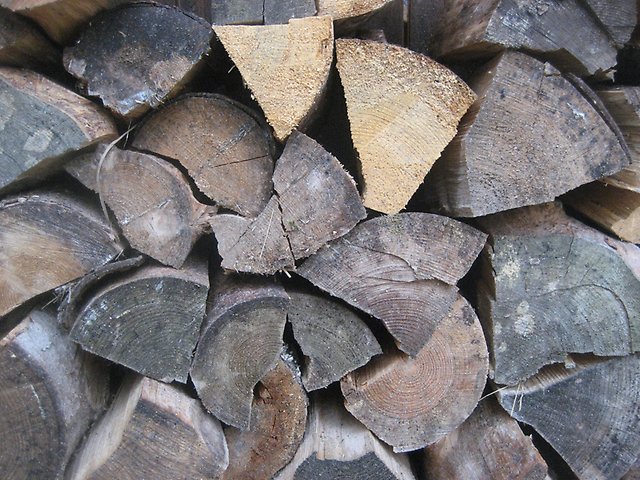
Wood burning is one of two major sources of air pollution in cities and communities. The other major source is traffic, which pollutes with wear particles and exhaust fumes.
Air Pollution in Urban Areas
In cities, air quality varies significantly. Two major sources of air pollution are road traffic producing exhaust and wear particles and residential wood burning. For several years, we have been developing national-scale modelling in which background air (containing pollution transported to Sweden from other countries) is combined with local emissions in cities and along roads. The national modelling provides retrospective air quality information across the country, and we continue to refine the service.
For sensitive groups, short-term air quality forecasts can be particularly valuable. In collaboration with researchers across Europe, we are now developing services for air quality forecasting.
International Collaboration
Through bilateral partnerships, we work with researchers and experts in Brazil, South Africa, and Indonesia. These collaborations allow us to exchange knowledge and gain valuable experience regarding the spread and effects of air pollution in different climates.
One example of an international project involving SMHI researchers is a bilateral initiative in the Western Balkans, where we work together to enhance understanding and improve air quality. One of the tools used is air quality modelling.
Partnership for improving air quality in the Western Balkans
Read about more topics
Related links

More about reseach releted to air quality
Our Research Units
All our research is developed through our four research units and the research projects we lead and participate in. Through this research, we advance our models and tools for the benefit of society and SMHI.
Meteorology — Hydrology — Oceanography — Climate at the Rossby Centre
National and International Collaboration
A large part of our research and development is carried out in cooperation with others.
Models based on research and development
Examples of models used for research about air quality:
Research projects that develop
Examples of research projects that develop models, methods, and tools for air quality: