
Climate research and development
Rossby Centre is involved in national and international projects on climate modelling and research, and on the application of climate information for decision-making for adaptation as well as for measures that limit climate effects.
The research at Rossby Centre aims to increase knowledge about the future climate with a focus on societal benefits. It includes climatological, meteorological, oceanographic and hydrological aspects. The work includes a chain of activities with model development, climate simulations and evaluation of data for climate studies and climate services at SMHI, in Sweden and in Europe, climate information, as well as application of model data for impact and adaptation studies. Rossby Centre participates in national and international projects in climate modelling, climate research and the application of climate information.
Facts and knowledge from our research are used in decisions on measures to limit climate-change emissions to reduce negative climate effects and consequences for society and the natural environment, and to plan and adapt society to a new, changed climate in due time.
Find on this page
Within the Rossby Centre there are five strategically important research areas that cover signicifant aspects of climate research:

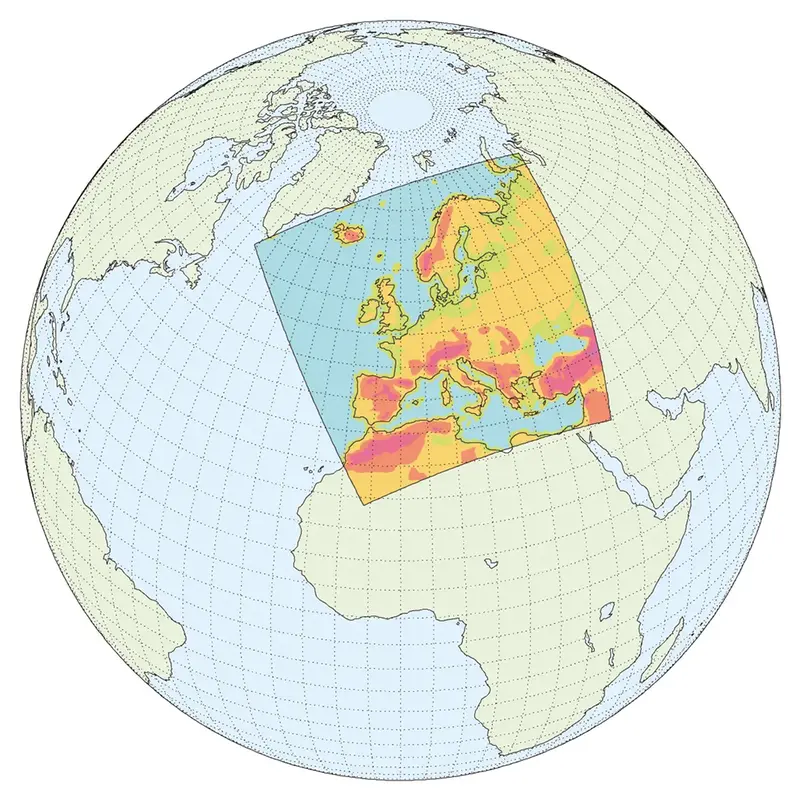


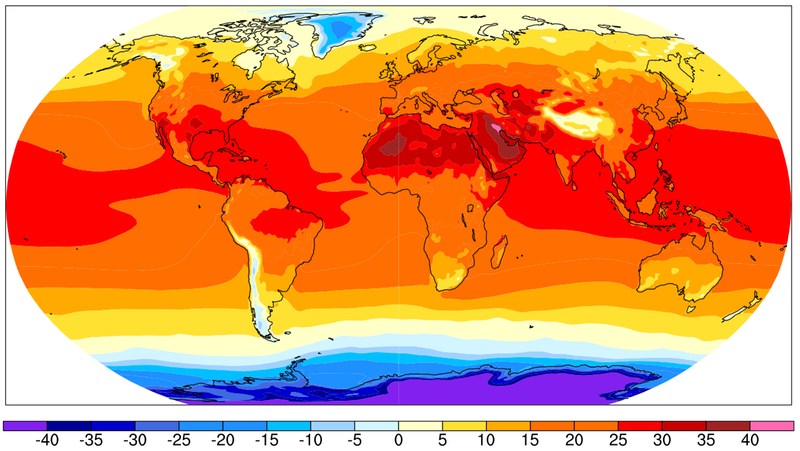
Rossby Centre develops three-dimensional numerical models of the climate system. The models are based on mathematical descriptions of the physical interaction between processes in the climate system, and describes the interplay between atmosphere, sea, land and ice. The climate models are verified against observations of the climate up to today. The researchers also calculate how robust and reliable the results are with different assumptions about future greenhouse gas emissions, in order to increase the usefulness of the results.
Climate scenarios are produced with both global and regional climate models and are differently detailed at global, regional and local level. The climate scenarios can be used as a basis for society beneficial decisions and for further research.
The current regional climate model at Rossby Centre is HARMONIE-Climate, HCLIM, which is used for detailed climate scenarios. These include extreme events much more realistic than was possible in previous models. HCLIM will be expanded with coupled versions with ocean models and vegetation processes. The regional atmospheric model RCA is about to be phased out.
Rossby Centre has developed a global climate model EC-Earth3, which is used for international projects on global warming. Data and results from EC-Earth3 are included in the research that forms the basis for the conclusions presented in the latest report from the UN Climate Panel IPCC AR6. A new global climate system model, EC-EARTH4, is being developed in collaboration with a consortium of European weather services and universities and the European Centre for Medium Range Weather Forecasts.
Rossby Centre thus delivers climate knowledge, data and information as a scientific basis for decisions. This is done in collaboration with other groups within SMHI and in national and international projects.
Contact us at the Rossby Centre
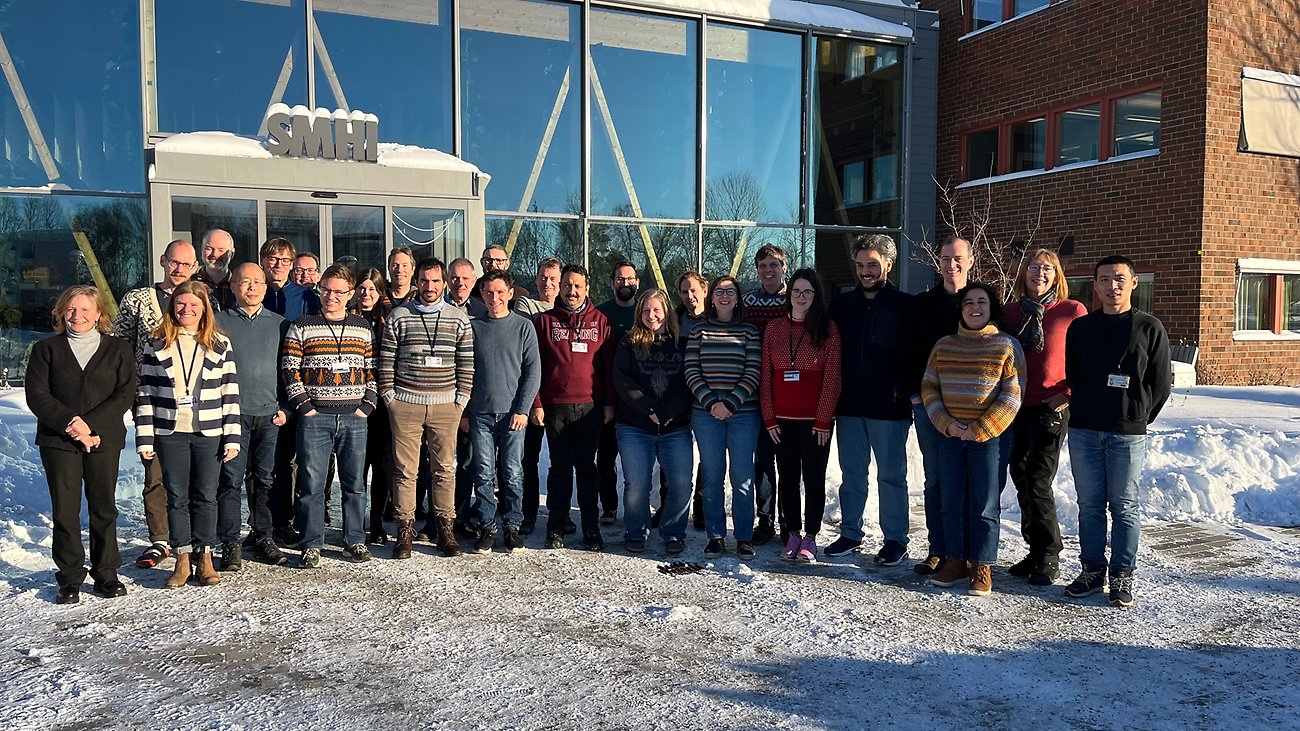
The unit is led by Helena Martins, together with Ralf Döscher and Torben Koenigk.



Rossby Centre arranges the Swedish Climate Symposium
We publish our research in international peer-reviewed journals and in SMHI reports. The two most recent publications are shown below.
Impact of wave coupling and the Charnock parameter on tropical circulations in a climate model
Taek-Bum Jeong, Navajyoth Puthiyaveettil, Joakim Kjellsson, Jean-Raymond Bidlot, Wonsun Park
Impact of climate change on the photovoltaic power potential in Sweden across 21st century
Tianqi Ruan, Fuxing Wang, Bjorn Laumert, Aitor Aldama-Campino, Wujun Wang
A wave of oceanographic articles published
During April and the first week of May, the oceanographic research unit at SMHI had no fewer than seven scientific articles published.
Unique research project develops ten-year forecasts for the Baltic Sea, the Mediterranean and the Black Sea
A new international research project is tackling the challenge of producing climate forecasts for the oceans for as short period as ten years ahead. “Unique in the world,” says Magnus Hieronymus, research leader at SMHI’s Oceanographic Research Unit. The aim is to help Europe’s marine and coastal areas become more resi...
Nordic report highlights risks linked to AMOC tipping
The report “A Nordic Perspective on AMOC Tipping” reviews the potential impacts of potential Atlantic Meridional Overturning Circulation (AMOC) collapse. Researcher from SMHI and other Nordic research institutes calls for strengthened mitigation, improved monitoring, and increased preparedness in the Nordic region..jpg)