
Report from conference in Vietnam highlights the need for robust climate information
Vietnam offered both storms and flooding when the “Asia Climate Risk and Impact Strategic Workshop” was held in Quy Nhon in late November. SMHI co-organised the workshop with the aim of beginning to outline proposals for pilot projects to strengthen interdisciplinary climate collaboration and knowledge exchange across Asia.
The workshop was part of the fifth edition of the “International Vietnam Conference on Earth and Environmental Sciences” and was organised together with the UK Met Office through the Weather and Climate Information Services (WISER) Asia Pacific (AP) programme, WCRP CORDEX (Coordinated Regional Climate Downscaling Experiment), as well as local partners from Vietnam and other parts of Asia.
The conference built on previous meetings, all aimed at strengthening joint efforts through increased exchange of climate information, capacity development, and transdisciplinary collaboration in Asia. From SMHI, Iréne Lake participated on site, while Lindha Nilsson joined online.
Climate impacts became evident upon arrival
When Iréne Lake, international project manager at SMHI, arrived in Quy Nhon and witnessed the devastation caused by cyclones and flooding, the vulnerability of people, animals, and nature became immediately apparent - as did the importance of reliable decision-making support and knowledge to adapt and build resilience to the impacts of extreme weather and a changing climate.
– When we travelled from the airport to the hotel, we drove through deep floodwaters, and everywhere I saw destroyed houses, fallen trees, and debris piled up in large heaps. When I went for walks, especially along the seafront, I saw many damaged and closed restaurants and shops. Many people were working to clear debris, repair damage, and replant. In the news, I read about people in Southeast Asia who had lost everything and about rising death tolls, says Iréne Lake.
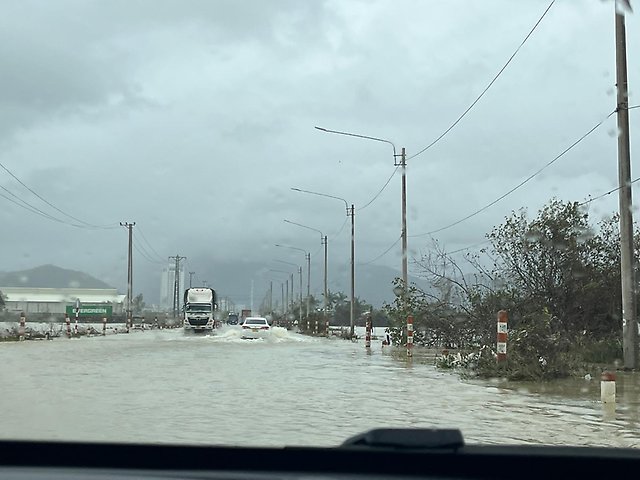
Picture taken by Iréne on the way from the airport.
During the week, she followed forecasts for the next approaching tropical cyclone, which could potentially affect the return journey. Indeed, the outbound flight from Quy Nhon was changed due to operational reasons, requiring a rapid adjustment - packing up and heading to the airport quickly, an option not available to everyone.
– Representatives from several countries took part in the workshop, and many were personally affected in different ways. We heard how early warnings and information communicated in different ways are especially important for people with disabilities, who may have difficulties moving quickly. And for people living in informal settlements that are particularly vulnerable to extreme weather, says Iréne Lake.
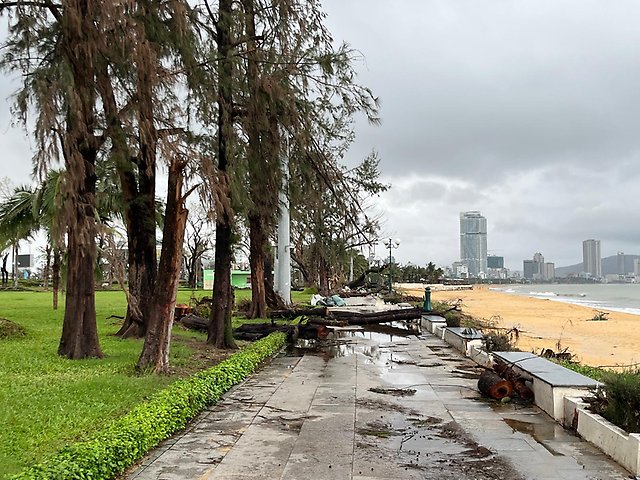
Trees blown down during a typhoon in Vietnam. Along the promenade, many trees had fallen.
Workshop objectives: building sustainable climate solutions
The main purpose of the workshop was partly to listen to the challenges and needs of different groups, which then served as a basis for beginning to develop the details of various pilot projects - projects intended to build a solid foundation for interdisciplinary communication, trust, and collaboration. The objectives also included:
- identifying potential stakeholders and projects with clear synergies,
- developing best practices for jointly creating training programmes,
- identifying tools for developing training programmes and modules, and establishing those modules.
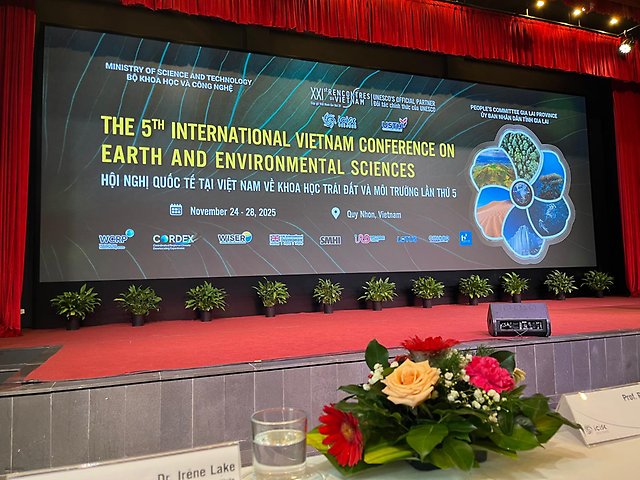
The programme during the first two days included presentations and discussions on existing needs and challenges, as well as the types of climate information requested by users. Representatives from sectors such as health, food, and water participated in the workshop. Representatives and members of marginalised groups also took part to share their experiences and perspectives, through organisations including Children of Vietnam and the Philippine Action for Community-Led Shelter Initiatives.
During one session, participants were introduced to good examples of successful and sustainable training programmes and began exploring potential collaborations. In addition, several international funders, including the Belmont Forum and the Foreign, Commonwealth & Development Office (FCDO), were invited to present their work and the opportunities available for applying for funding.
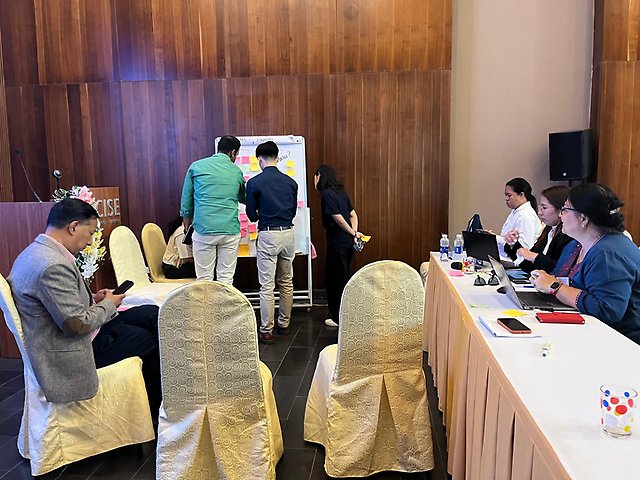
Discussions during the workshop. The discussions were ongoing throughout the event.
From ideas to future pilot projects
The final day of the workshop was dedicated to allowing those interested in continued engagement to begin developing concrete proposals.
– These initial proposals are what we will now continue to develop into pilot projects that we hope will result in useful tools and training programmes that can be applied across multiple regions and sectors in the future, says Lindha Nilsson, administrator and coordinator at SMHI.
