
Water is essential for life. Despite this, knowledge about water resources and their dynamics is often lacking when it comes to meeting the needs of both society and nature. In addition, we increasingly experience situations with too much, too little, or too polluted water. At SMHI, we conduct research to understand, quantify, and predict how water changes - at both small and large scales.
Find on the page
We Conduct Research on the Water Cycle
Hydrology is the study of water on land: from when it falls as rain, through the soil, lakes, and watercourses across the landscape, until it flows out into the sea.
To better understand the processes that control water flow and its variation in time and space, SMHI combines different types of data (such as field measurements, Earth observations, radar, and meteorological models) and variables (such as topography, precipitation, land use, soil types, and human water management) with numerical calculations of hydrological processes.
Hydrological processes operate on different scales, depending on the size and characteristics of the catchment area. In large and mostly natural catchments, rain and snow are transformed slowly into water flow across a broad area. It can take days to weeks for water from peripheral parts of the basin to reach a watercourse. In small and especially urban catchments, the process is much faster, and the flow response to rain or snowmelt can occur within hours or even minutes.
SMHI conducts hydrological research to support sustainable water use by providing decision-making tools that balance both societal and environmental interests even when they may conflict.
We Conduct Research on Water Quality
In a sustainable society, good access to high-quality water is essential for drinking water supply, ecosystem functioning, agriculture, and forestry.
At SMHI, we calculate water transport and concentrations of nutrients, sediments, organic carbon, pathogens, and plastics, as well as the effects of different measures to improve water quality. We analyse where pollutants come from and how various human interventions in nature affect water quality.
We model the transport of nitrogen and phosphorus, which contribute to eutrophication; organic carbon, which affects the browning of drinking water; pathogens that can render water unsafe to drink; and sediments that clog reservoirs. Computational models are important tools for understanding water quality issues, complementing observations where data are not available.
Model Calculations with HYPE
At SMHI we develop the hydrological model HYPE, which describes water occurrence in Sweden and across the world. Using the model, we can track water flows and water quality today and calculate future changes.
SMHI issues forecasts and warnings related to high flows and flooding in watercourses and certain lakes. HYPE forms the basis for these warnings in Sweden and is also used in different versions across Europe, the Arctic, and globally.
With these models, researchers can examine the effects of, for example, dams, drinking water withdrawals, and changes in land use. We also scale up local changes to regional or national levels.
The hydrological models we build and refine are primarily based on the HYPE code and several development steps, including topographical delineation of catchments, process-oriented spatial division within subcatchments, description of specific hydrological components, calibration, and evaluation. We analyse data from models and observations to deepen our understanding of hydrological processes and how they can best be simulated in different situations.
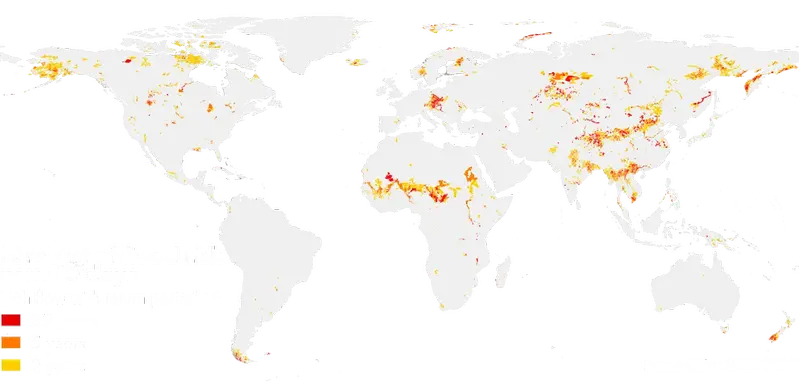
From Sweden to the World
SMHI’s expertise on the water cycle is also used in other parts of the world. We work on pilot services, capacity development, and climate adaptation in regions such as Africa, to maximize the societal benefit of our knowledge.
Our HYPE model is open-source, and the global version is shared with other researchers and hydrologists. This enables SMHI researchers to contribute to developing hydrological warning services in countries and regions where such systems do not exist.
One example is a successful collaboration in West Africa, where SMHI researchers, together with regional partners, have established a production system for hydrological forecasts. It can be used across all 17 countries in the region.

West Africa – operational flood forecasts and warnings
Climate Services
SMHI’s global hydrological model is also used in climate services to provide information about future changes in water availability. Two examples are the European climate service Copernicus and the global Climate Information Portal. The latter was developed in collaboration with the WMO and the UN Green Climate Fund to support climate adaptation in developing countries.
Read about more topics
Related links

More about research related to lakes and watercourses
Our Research Units
All our research is developed through our four research units and the research projects we lead and participate in. Through this research, we advance our models and tools for the benefit of society and SMHI.
Meteorology — Hydrology — Oceanography — Climate at the Rossby Centre
National and International Collaboration
A large part of our research and development is carried out in cooperation with others.
Models based on research and development
Examples of models used for lakes and watercourses:
Research projects that develop
Examples of research projects that develop models, methods, and tools for lakes and watercourses: