
Already today, the occurrence of heatwaves both on land and in the sea, intense precipitation, and drought has increased. The intensity of many extreme weather events has also risen as a result of climate change. We conduct research on extreme weather to help society become better equipped, safer, and more prepared for extreme weather events.
Find on the page
How Do We Know Whether an Extreme Weather Event Is Caused by Climate Change?
When extreme weather occurs, SMHI is often asked: “Did this happen because of climate change?” The answer is complex. We know that global warming increases the likelihood of certain types of extreme weather, but directly linking a single event to climate change is difficult. In many cases, the event could have occurred regardless but the probability of it happening is higher with today’s human influence on the climate. We also know that the intensity of some extreme events increases in a warmer climate.
At SMHI, we conduct research on extreme weather attribution, meaning the extent to which a specific weather event can be said to have occurred due to human influence on the climate. We do this partly by using climate models and weather data to compare today’s climate with a hypothetical climate without human influence. We also use long-term historical temperature and precipitation records from Sweden and compare today’s extreme events with similar events from a pre-industrial period. Both methods allow for a direct comparison of probabilities between the two time periods.
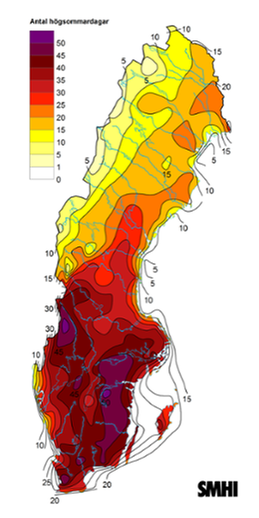
The probability of heat waves like those seen in the summer of 2018 has doubled
To the news articleCloudbursts and Flooding
A warmer atmosphere can hold more water vapor, which in turn leads to both more frequent and more intense precipitation. To reduce society’s vulnerability and increase resilience to a changing climate, deeper knowledge of both cloudbursts and flooding is needed.
When intense rainfall hits cities, water often cannot drain away quickly enough, leading to extensive damage to buildings and infrastructure. Our research aims to improve observations, models, and forecasts for cloudbursts, enabling society to better manage their impacts. By developing and using high-resolution models, we can study how cloudbursts may intensify in future climates and simulate water flows and flood risks that may arise. This knowledge guides planning and construction of infrastructure that is durable and resilient to extreme weather events.
The main cause of high flows in Swedish rivers and lakes is large volumes of snowmelt and rainfall, which can lead to flooding in vulnerable areas. Today we receive almost one-fifth more rainfall than a hundred years ago, and the number of days with snow cover has decreased. Using our hydrological model S-HYPE, we can produce information on high-flow events under different future climate scenarios. By studying these changes, we provide decision support for better protecting communities against future flood risks.
Drought and Fire Risk
SMHI’s research uses and develops advanced computational models to examine how a changing climate with rising temperatures, increased evaporation, and shifting precipitation patterns affects the frequency, duration, and intensity of dry periods. This knowledge is crucial for adapting society to future climate conditions, such as prioritizing water resources, securing food production, minimizing economic losses, and protecting communities and ecosystems from negative impacts. We simulate extreme hydrological events such as droughts and floods, and together with societal stakeholders, we explore how water allocation during drought can be planned and prioritized safely and fairly.
When the ground is dry, the risk of forest and grassland fires increases. At SMHI, we also conduct research on fire risk in a changing climate, where our results show that high-risk periods for fires are likely to increase particularly in southern Sweden and along the Norrland coast. We produce information to support planning, adaptation, and preventive measures for future fire risks, and we develop methods to improve fire risk forecasting.
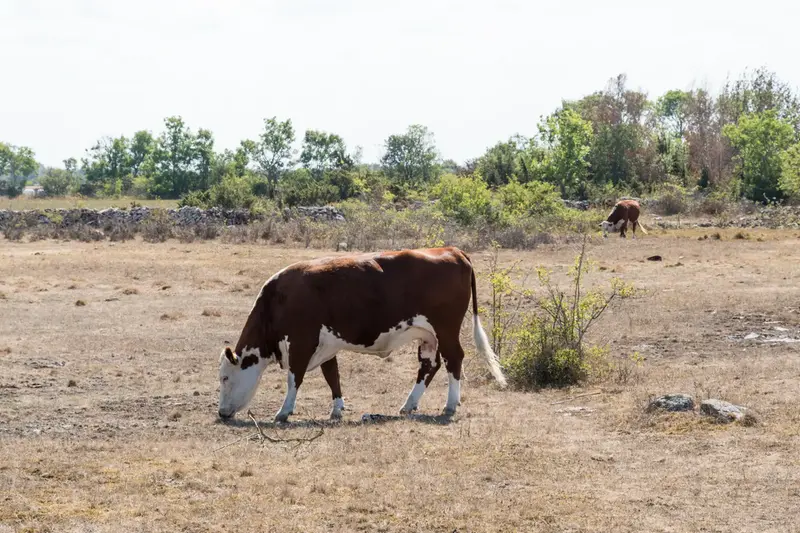
Fair Water
The Fair Water research project aims to create consensus in society regarding the risks and distribution of water, both today and in the future.
Coastal High Water Events
Our research shows that future high water events along Sweden’s coasts will likely become both more frequent and more intense due to climate change. For municipalities and authorities to plan sustainable infrastructure, it is essential to increase understanding of how high water events may develop under future climate conditions. High water levels depend on both mean sea level and extreme weather events such as storms. We study both components and how they interact.
Global sea level rise caused by melting glaciers and the thermal expansion of warmer oceans - also affects the Swedish coast, where we see rising mean sea levels. We use different global climate scenarios to examine future sea level rise and how it may affect our coasts in combination with storms.
To predict changes in storm intensity and frequency, we work with a limited number of measurement series from the Swedish coast. To compensate for this, we use statistical methods and machine learning to generate data on extreme events in locations without measurement stations. This gives us deeper understanding of both historical and current extreme events and helps us anticipate future developments.
Urban Heatwaves
SMHI conducts research to improve understanding of how heatwaves affect urban environments. Cities are particularly vulnerable because dense buildings and paved surfaces absorb heat, creating urban heat islands. Our research shows that extremely hot events - previously occurring once every twenty years may occur every three to five years by the end of this century. Therefore, adapting urban planning to future conditions is becoming increasingly important.
We produce high-resolution simulations of the urban climate to investigate how heat stress conditions in different parts of the built environment are influenced by buildings, materials, and vegetation. We study how humans experience different combinations of air temperature, humidity, radiation temperature, and wind. Knowledge from our research can then be used in practical planning - designing cities that help residents cope with extreme heat. For example, we study how green and blue infrastructure, such as parks and waterways, can reduce the negative effects of urban heatwaves.
Read about more topics
Related links

More research related to extreme weather
Our Research Units
All our research is developed through our four research units and the research projects we lead and participate in. Through this research, we advance our models and tools for the benefit of society and SMHI.
Meteorology — Hydrology — Oceanography — Climate at the Rossby Centre
National and International Collaboration
A large part of our research and development is carried out in cooperation with others.
Models based on research and development
Examples of models used for extreme weather:
Research projects that develop
Examples of research projects that develop models, methods, and tools for extreme weather: