
To use renewable energy sources such as solar, wind, and hydropower, our knowledge of weather, water, and climate is a crucial piece of the puzzle. Our research expands the knowledge needed to build a sustainable energy supply.
Solar, wind, and hydropower all depend on the weather. To create a predictable and well-functioning energy system, detailed weather forecasts tailored to the specific needs of each energy sector are required. Through applied research, we can help answer many of the questions that arise in efforts to create a sustainable energy system

Did you know that...
June is the sunniest month in Sweden
Current Research for a Sustainable Energy System
Research for Detailed Sunshine Forecasts
Solar energy is a renewable energy source that has expanded rapidly in recent years. For solar energy production, detailed forecasts of sunshine and cloud cover are essential, enabling the energy sector to calculate how much solar power can contribute to the overall energy mix. Our research on probabilistic forecasts and uncertainty calculations provides the energy sector with improved assessment and decision support for balanced and sustainable energy production.
Satellites monitor the entire atmosphere and provide vast amounts of data that we analyse. We have processed and compiled global normal values for solar radiation. This type of data is valuable for weather-dependent activities such as agriculture, as well as for planning solar power installations and monitoring solar energy production.
Detailed weather forecasts showing sunshine and cloudiness are essential for energy producers to estimate their solar electricity production. Broader climatological normal values can be used when planning new facilities and for production follow-up.
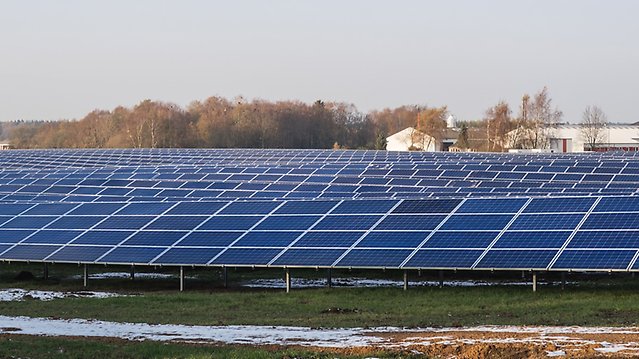
Detailed weather forecasts showing the amount of sunshine and cloud cover are important for energy producers to be able to forecast their solar power production. Overall normal values can be used when designing new facilities and for monitoring production.
Research to Support Wind Power Expansion
Wind power is a renewable energy source available year-round in Sweden, although cold climates pose risks of ice formation on wind turbines. Our expertise and models can be used to generate specialized forecasts showing the risk of icing on turbines and to investigate how wind climate may change in the future. We have also studied how the construction of wind farms affects the microclimate in the surrounding area.
How does the establishment of offshore wind farms affect the marine environment? And can oxygen depletion in deeper waters be mitigated by pumping oxygen—produced as a by-product during offshore hydrogen production using wind power—down to the seafloor? These are examples of questions our researchers explore to contribute new knowledge related to offshore wind energy.
Hydropower in a Changing Climate
Forecasts are also essential decision-support tools for the hydropower industry. Through our research and development, we have created longer-term forecasts aimed at the hydropower sector in the form of hydrological seasonal forecasts covering the coming six months.
To increase understanding of how these forecasts can be used, we developed a game that trains users to interpret and apply the information contained in seasonal forecasts in a simple and engaging way. In the game Call for Water, you must secure the water supply in the town of Thursty Town while keeping the economy in balance. The game has been highlighted as an example of a user-friendly product at the EU’s Research and Innovation Days in Brussels.
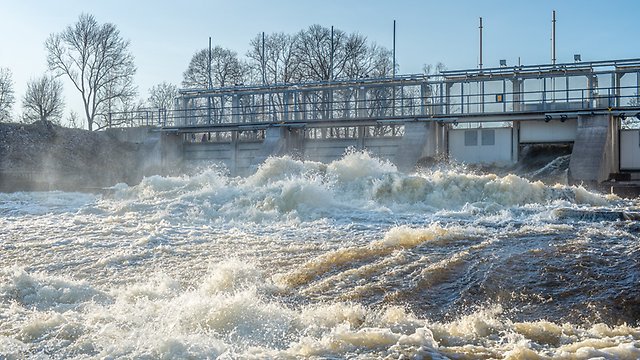
Hydropower has long been used for energy production in Sweden. SMHI's research provides knowledge about future conditions for producing hydropower in a changing climate, where precipitation patterns and access to water are changing.
A changing climate also affects water availability. Variations in precipitation, snowfall, and inflow to hydropower reservoirs all influence conditions for hydropower production. For example, we clearly observe that spring floods in northern rivers occur earlier in the year and with lower volume - consequences of shorter winters with less accumulated snow. At the same time, we see a general increase in annual precipitation, which can translate into higher hydropower production.
Sedimentation, when small soil particles settle on the bottom of lakes and watercourses, is also a challenge for hydropower. SMHI has studied how water reservoirs are affected by sedimentation, both now and in a future climate, and how this may impact various types of operations, including energy production, in European countries.
Read about more topics
Related links

More about research related to sustainable energy
Our Research Units
All our research is developed through our four research units and the research projects we lead and participate in. Through this research, we advance our models and tools for the benefit of society and SMHI.
Meteorology — Hydrology — Oceanography — Climate at the Rossby Centre
National and International Collaboration
A large part of our research and development is carried out in cooperation with others.
Models based on research and development
Examples of models used for research about sustainable energy:
Research projects that develop
Examples of research projects that develop models, methods, and tools for sustainable energy: