
How to become a hydrologist
Water of good quality is essential for both humans and animals. All societies need access to sufficient water - but not so much that it poses a risk of flooding! Hydrologists work on a wide range of issues related to water on land.
There are over a hundred people at SMHI working with hydrology—the science of water on land.
"We work on many exciting issues, and we have all arrived here via different paths", says hydrologist Katarina Stensen. Most hydrologists have backgrounds in natural sciences or engineering, with academic degrees from programmes in hydrology, hydrogeology, or environmental and water technology. Others come from the tech side and are system developers.
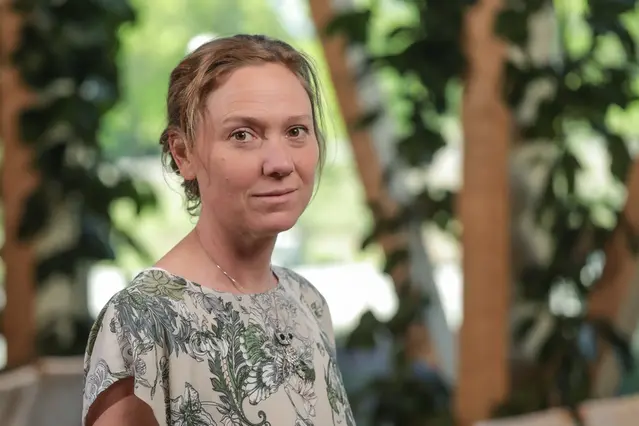
Katarina Stensen works as a hydrologist at SMHI.
Water and environmental issues from different perspectives
There are various roles that a hydrologist can work in. One might work broadly on water issues, such as modelling how much water will flow in a watercourse, which can be done for time scales ranging from a few days to a hundred years into the future.
"Modelling flows means using advanced data models, and in some cases climate models, to calculate how much water will be present and how it will flow", explains Katarina.
Other hydrologists play a crucial role in communicating the current water situation and the risk of potential water shortages or floods. In so-called warning situations, hydrologists then support other authorities such as emergency services, county administrative boards, and water management.
I chose this profession because I wanted to work on something important. Clean water in the right place is essential for life. There is a strong focus on climate issues now, and the climate will affect the availability of clean water.
- Katarina Stensen, hydrologist at SMHI
There are also hydrologists who are often "out in the field." They travel around Sweden to measure water flows on-site and maintain SMHI's various water gauging stations.
Some hydrologists work on consulting assignments related to issues such as environmental problems, hydropower, or water regulation in Sweden's rivers and streams. Other hydrologists choose to pursue a PhD at a university and then research topics such as large-scale hydrological modelling, sustainable development, and climate issues.
A growing group of hydrologists at SMHI also works with the systems behind the models or with presenting hydrological data in a clear and accessible way on the website smhi.se. To work in these areas, one can study to become a system developer, a field with educational programmes available in many parts of the country.
Studies in hydrology
Hydrologists may have various backgrounds, but the most specialised educations for working in hydrology is available at institutions such as:
Stockholm University
Bachelor’s Programme in Geosciences - Stockholm University External link.
Lund University
Geographic Information Science – Master’s Programme External link.
Civil Engineering in Ecosystem Technology External link.
Uppsala University
Hydrology/Hydrogeology - Master’s Programme in Geosciences External link.
Civil Engineering in Environmental and Water Technology External link.
University of Gothenburg
Geosciences, Bachelor’s Programme (swedish website) External link.
Swedish University of Agricultural Sciences
Master's programme in Soil, Water and Environment External link.