
Forecasting and warning service vital for agriculture in Zimbabwe
"Zimbabwe is becoming increasingly vulnerable to drought and other climate related hazards, creating significant challenges for key sectors, particularly agriculture, on which a large part of the country’s livelihoods depend" says Richard Alpfjord Wylde, project manager for SMHI’s international development project in Zimbabwe.
The aim of the project is to contribute to the country’s efforts to develop its own meteorological and hydrological forecasting and warning service.
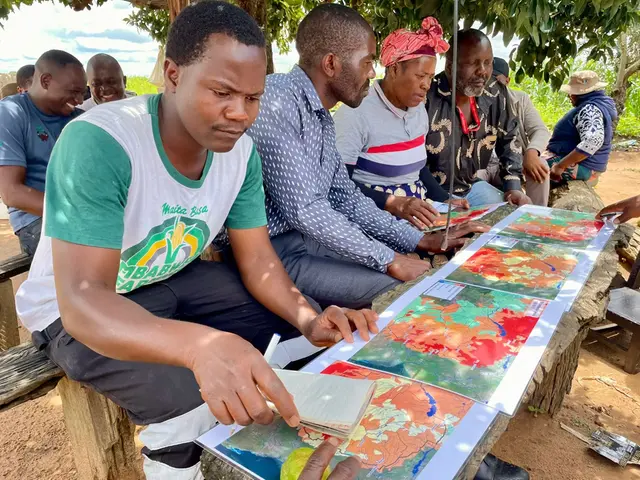
Field visit where small-scale farmers in Zimbabwe provide feedback on new hydrological forecasts.
The project that SMHI is working on involves local partners, including Zimbabwe’s Meteorological Service Department (MSD) and the country’s hydrological authority (ZINWA).
"With support from SMHI, we have enhanced our ability to produce improved forecasts and ensure their dissemination to even the most isolated communities" says Rebecca Manzou Director of MSD (Meteorological Service Department) in Zimbabwe.
Local villages are also engaged, with field visits to discuss the relevance and usability of forecasts and warnings.
"In 2024, Zimbabwe was affected by an extreme drought, so severe that the president declared a national disaster. With reliable forecasts and information about the upcoming rainy season that reached even the most remote villages, people were able to plan better. For example, they could choose to invest in crops that require less water, or in the driest areas, focus on livestock. This is a clear example of development cooperation helping to prevent a humanitarian crisis." says Richard Alpfjord Wylde.
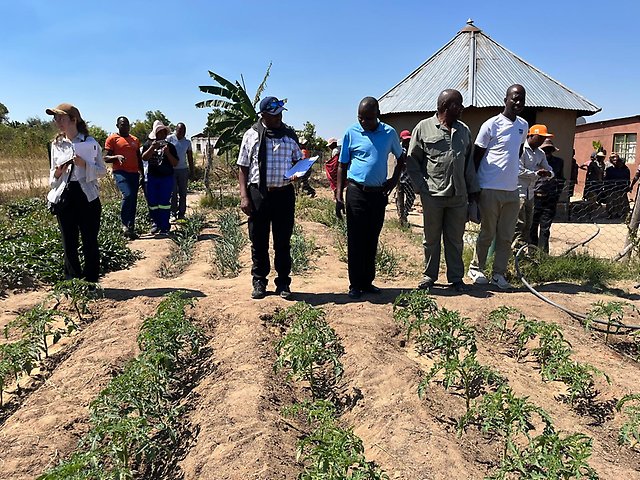
Field visit during the 2024 drought in Zimbabwe, where farmers have adapted their choice of crops based on available forecasts and climate information.
Joint forecasting work for weather and water
The focus of the project this spring is to help bring hydrologists and meteorologists together in a joint forecasting effort, instead of working in parallel at two different institutes in Zimbabwe.
"This is a way of working that we apply at SMHI, and it provides accurate and useful warnings, for example in the case of floods", says Svea Bertolatus, assistant project manager.
AI technology to contribute
Another activity that will be prioritized is improvements to IT infrastructure at both partner institutions. This includes digitizing observational data using AI technology and further developing a hydrological model adapted to Zimbabwe.
"It is essential to address key technological deficiencies in Numerical Weather Prediction and Artificial Intelligence. Providing our data recovery and IT staff with advanced, state-of-the-art skills is essential to deliver prompt and precise meteorological information vital for protecting our most vulnerable rural communities" says Rebecca Manzou, Director of MSD (Meteorological Service Department) in Zimbabwe
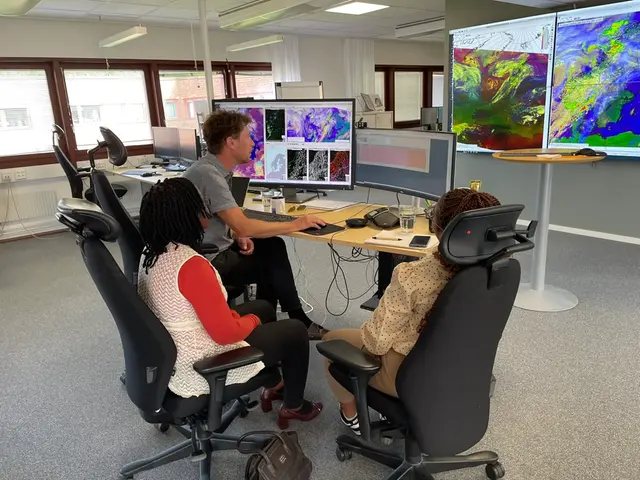
Two meteorologists from Zimbabwe receive training at SMHI’s forecasting center.
Project completion brought forward
SMHI’s project in Zimbabwe has been ongoing since 2018.
“Over the past years, together with our partners, we have built models, data flows, working methods and routines for operational hydrological and meteorological forecasting in Zimbabwe. The work has progressed from pilot studies to functioning systems and strengthened institutional capacity” says Richard Alpfjord Wylde.
The project in Zimbabwe will be completed in June 2026, more than two years earlier than originally planned. This follows a decision by the Swedish government in December to reduce development aid, resulting in the phase-out of bilateral development cooperation with Zimbabwe.
