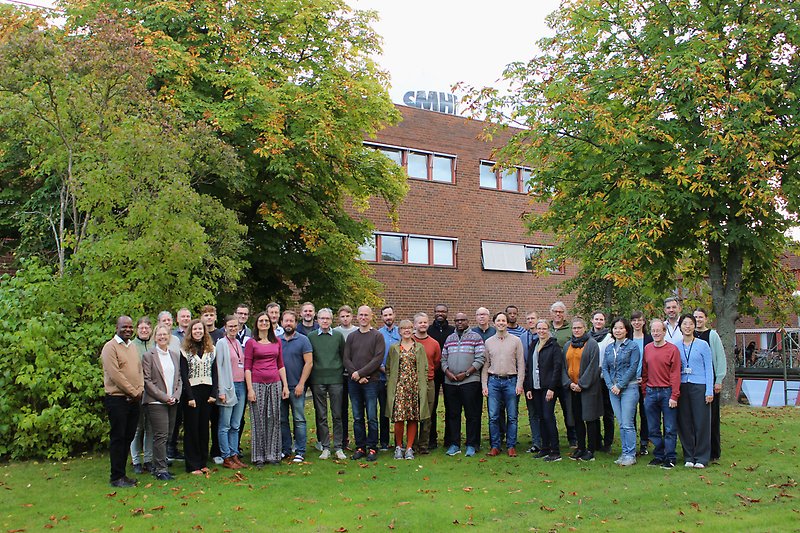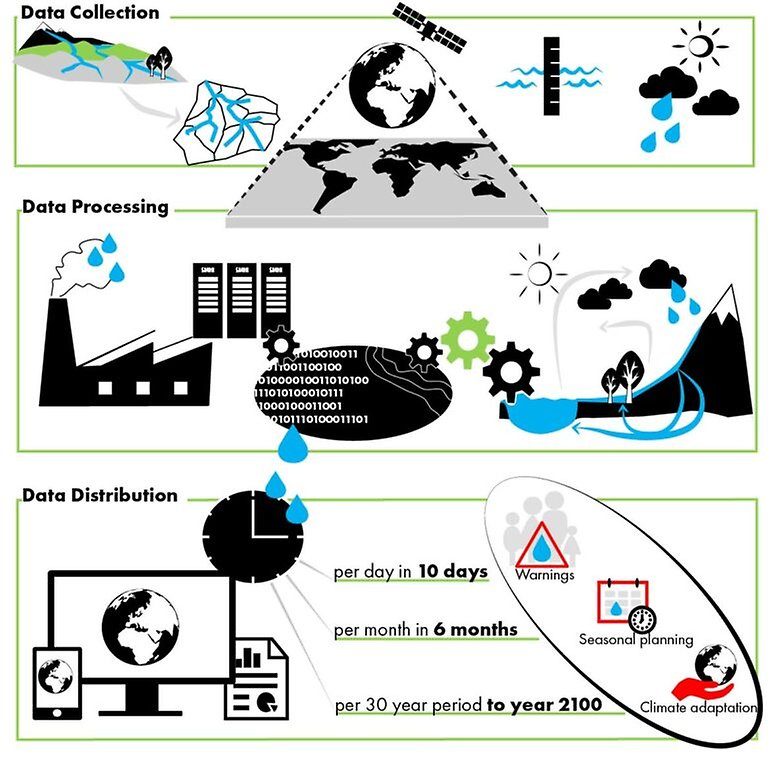
The SMHI hydrological research group works to develop hydrological forecasting and scenario tools, describe the hydrological consequences of climate change, modeling nutrient in rivers and biogeochemical processes in lakes.
The aim of the work is to provide better forecasting and warning services for the power industry, improved decision support for land management, environmental monitoring and action programs that help improve water quality.
Results will be used partly by SMHI and the production departments as well as directly by external users or in a purely scientific context. Several of the projects are carried out in co-operation with other research groups on a national as well as an international level.
Read more about Hydrological Research.
_______________________________________
News from SMHIs Hydrology Research
New Workshop for HYPE Open Source Community in September
Welcome to a new workshop for HYPE OSC the 18th of September. The workshop will be organized in connection to the Open Water Symposium at Vrije Universiteit in Brussels. We will present new features of HYPE and we will also give the opportunity for users to present their work using HYPE
Please read more about this and registration at HYPE-OSC webpage
New research program: Baltic Earth
A new international and interdisciplinary research programme, Baltic Earth, is launched. The aim of Baltic Earth is to achieve an improved understanding of the Earth system for the Baltic Sea region, focusing on physical and biogeochemical processes which interact in the atmosphere, in the sea including sea ice, and on land.
Earth System Sciences for Baltic Sea
Europe's discharge of nitrogen and phosphorus calculated
Agriculture discharges the most nitrogen into Europe's coastal seas. Discharges of phosphorus come from treatment works to a larger extent, although in some areas agriculture and forestry are responsible for large discharges. This is shown by a study carried out by scientists at the Hydrology Research Unit, SMHI.
Europe's discharge of nitrogen and phosphorus calculated
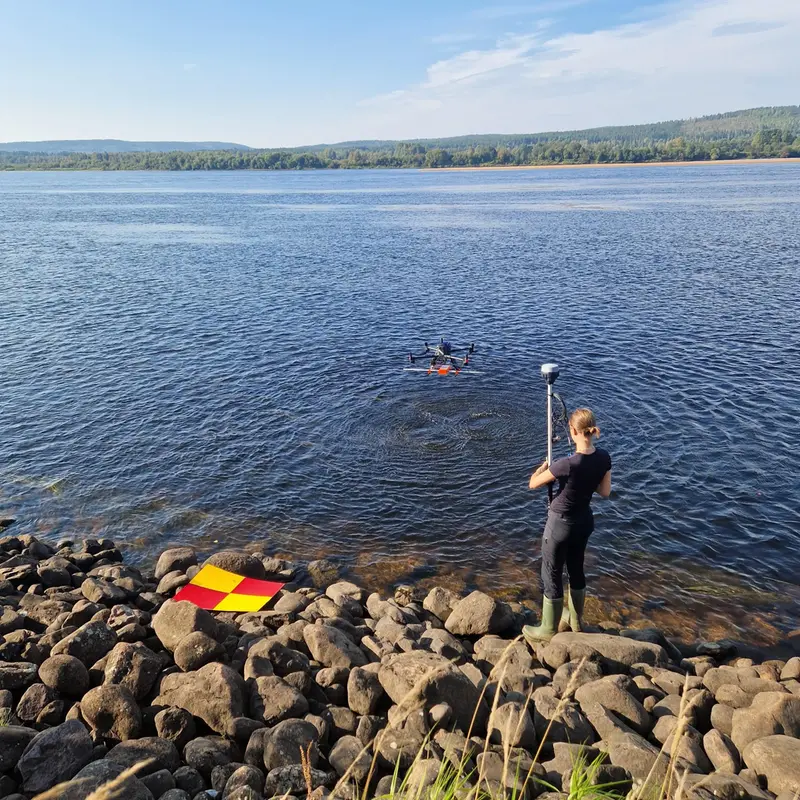
Satellite images make it possible to monitor ice break-up in Torne River
SMHI has used high-resolution satellite images for the first time to monitor ice break-up in Torne River, one of Sweden’s largest unregulated rivers.
Satellite images make it possible to monitor ice break-up in Torne River
The hidden water content of the snow layer
Satellite measurements can show the extent and water content of the snow coverage, and where it will melt. Scientists from SMHI are part of the European research project (Cryoland) aiming to develop new, simpler ways of using satellite data about snow and ice.
Satellite measurements show hidden water content of snow
Prize to article in Hydrology Research
Researchers at SMHI received the award for the best article in the journal Hydrology Research. The article describes how information from climate simulations can be adapted to develop scenarios for water flow and water balance in a future climate.
Award for best article.
The HYPE Open Source Community has been launched
The HYPE Open Source Community is now open to anyone interested in hydrology, for cooperative code development. The community was successfully launched recently.
Successful start for HYPE Open Source Community
Vizualisation of future climate and consequences for cities
A new production with visualization technology presents future climate and consequences for cities. Presentations of Urban Water Vision will be held in a Geodome at Stockholm Water Week.
Visualization of climate change and challenges for city planning
Climate change affects groundwater
By the end of the century parts of Sweden will have higher groundwater levels, while levels in the south-east of the country may decrease sharply.
Climate change affects groundwater
Scientific comparison of water quality models
A unique scientific comparison of hydrological models to assess water quality is being carried out. The primary aim of the international study is to increase knowledge on uncertainties in model-based decision support.
Scientific comparison of water quality models
Climate change a threat to sewage systems
Many cities could face problems with their sewage in the future. A research study for Stockholm shows that a change in precipitation, combined with a population increase, could bring disruptions as early as the middle of the century.
Climate change a threat to sewage systems
Workshop on snow modelling
The workshop was arranged at SMHI in January and started with a number of interesting presentations the first day. The second day the discussions were summerised in a white paper on snow modelling. The workshop saw participants from Sweden, Norway and France.
Documentation and information about the workshop
New service for European waters
Brand new opportunities for analysing water issues in Europe are now opening up thanks to a web service developed by SMHI. High-resolution information about water flows can be downloaded free of charge.
E-HypeWeb
New research into water flows in a changed climate
How can climate change affect water flows, flooding and the transfer of nutrients via water? A far-reaching research project is set to develop a new generation of tools for hydrological climate impact.
New research into water flows in a changed climateInternational Review commend Swedish tools for water quantity and water quality assessment
A new calculation system for the Swedish water management recently received good grades in a scientific evaluation. The international panel of experts highlighted the tools that can serve as a model for other EU countries.
REVIEW OF THE SWEDISH NATIONAL MODELLING SYSTEM (76 kB, pdf)New climate tools for cities in Europe
City planners can access unique tools for adaptation to climate change. An extensive European partnership project will gradually offer help along the way. With new tools, city planners, for instance, will be able to create their own scenarios and case studies as the basis for making decisions on action to be taken. In many towns, there are already periodically huge problems with flooding. Climate change may make the situation even more extreme in the future.
New climate tools for cities in EuropeThe discharge of phosphorus is an important part of the puzzle for reducing eutrophication in lakes and seas. Phosphorus levels can increase significantly in connection with the spring flood. More measurements will improve knowledge.
Increased phosphorus discharges during spring floodSouth Africa in a warmer climate
Warmer and drier, as well as heavier rainfall. South Africa is one of the regions that will be affected the most by climate change. A new research report shows how the climate will change and how various areas of society can adapt to the new conditions.
South Africa in a warmer climateHYPE - a new hydrological model
The next generation hydrological model is under development and will successively be put into use. The model HYPE - HYdrological Predictions for the Environment - improves the estimation of factors connected to water resources and quality and allows the results to be presented with a very high level of geographical detail.
Read more about HYPE
Warning, (in Swedish), level 1, Sweden