
Knowledge Exchange Creates Sustainable Solutions for the Future
As water scarcity becomes increasingly acute around the world, joint efforts are needed to find solutions. Through a bilateral environmental and climate cooperation initiative, SMHI is strengthening its collaboration with the University of KwaZulu-Natal in South Africa.
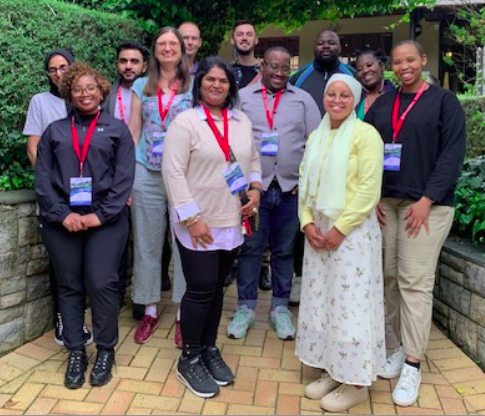
SMHI carried out a course in its hydrological modeling tool for hydrologists in South Africa to tackle growing water scarcity in a changing climate.
As climate change continues to affect communities worldwide, the need for innovative solutions to secure water supplies is growing. Through a bilateral environmental and climate cooperation initiative aimed at securing water supplies and supporting climate adaptation, SMHI is working together with the University of KwaZulu-Natal (UKZN) in South Africa. The aim is to develop tools and methods for water resource management that can be applied around the world.
The project builds on a long-standing partnership in which both parties contribute their expertise. SMHI supports the work with its hydrological modelling tool, Hydrological Predictions for the Environment (HYPE), which is being adapted to conditions in South Africa.
”Ensuring that the models perform well under South African conditions, with extended dry periods, will help qualify them to handle similar conditions in Sweden under future climate scenarios,” says Alena Bartosova, hydrology researcher at SMHI.
Through close collaboration between UKZN and uMngeni-uThukela Water, a regional authority responsible for water supply and wastewater treatment, research findings can also contribute directly to water management in the region.
Focus on Erosion and Water Allocation
Water-stressed areas in South Africa face considerable pressure on their drinking water supplies.
”There is not enough water to meet everyone’s needs, and new reservoirs and water transfer systems are being built to address this. However, these transfers affect water availability downstream, with consequences for both ecosystems and communities,” explains Alena Bartosova.
Erosion is another major challenge. Sediment accumulates in reservoirs, reducing their storage capacity and, in extreme cases, potentially filling them completely.
SMHI’s partners at UKZN are developing and testing modelling tools to support water allocation in South Africa. This is also a relevant issue for Sweden, where similar scenarios are emerging, with an increasing risk of water scarcity.
Mutual Knowledge Exchange
Alena Bartosova and Conrad Brendel, both hydrology researchers at SMHI, have visited South Africa to investigate areas affected by erosion and meet with fellow researchers on site. An important part of the visit was to gather data and knowledge to support the development of HYPE for the region. Discussions on future collaboration were also on the agenda.
The partnership is built on mutual knowledge exchange. In September, Mark Horan, Senior Hydrology Tutor at uMngeni-uThukela Water, visited Norrköping, Sweden, to take part in SMHI’s HYPE course and continue the dialogue.
